ShuBee

Skip to Main Content »

Search Site
how can we make you smile today? 877.974.8233

Increase Closure Rates

December 15th, 2008

Doom and Gloom attitudes don’t make sales. It’s more important now to focus on the tips and techniques that will ensure business survival as ever!

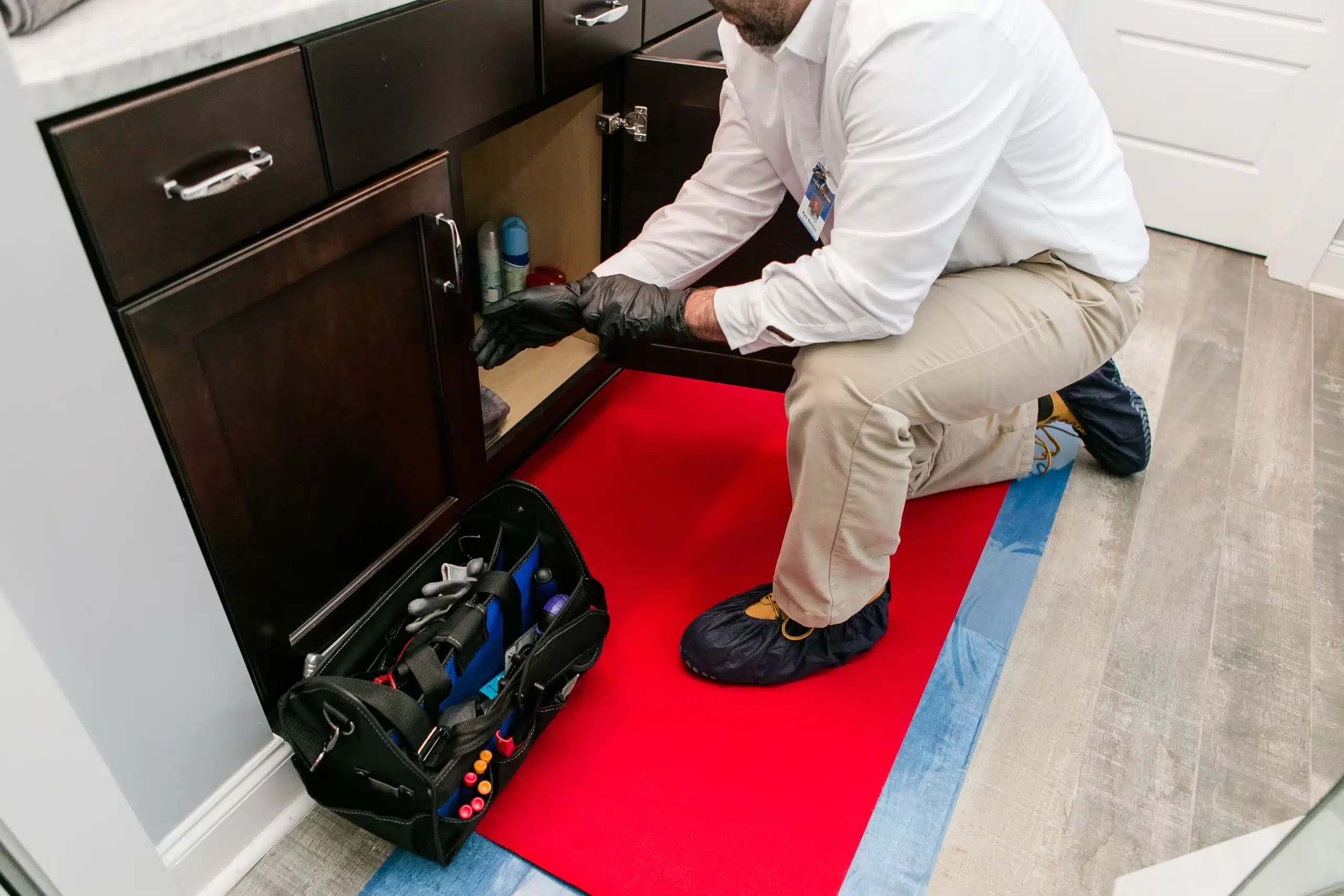
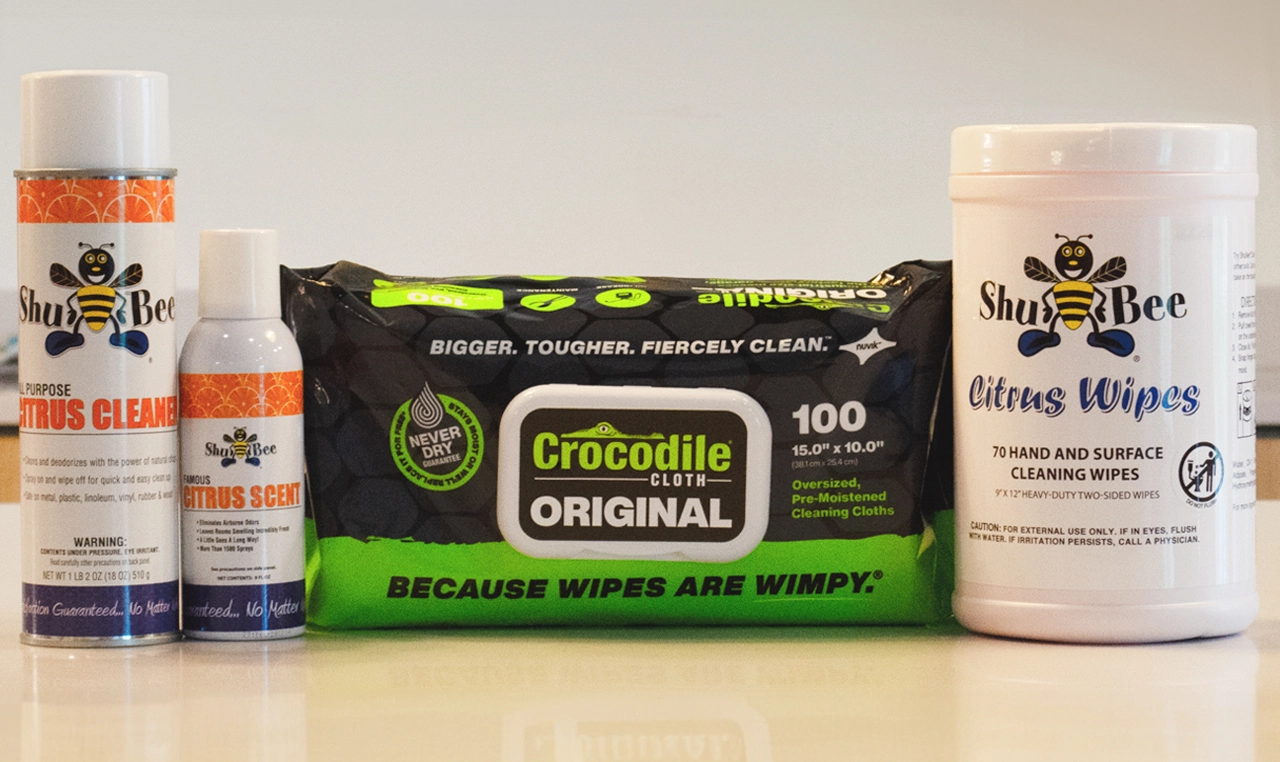
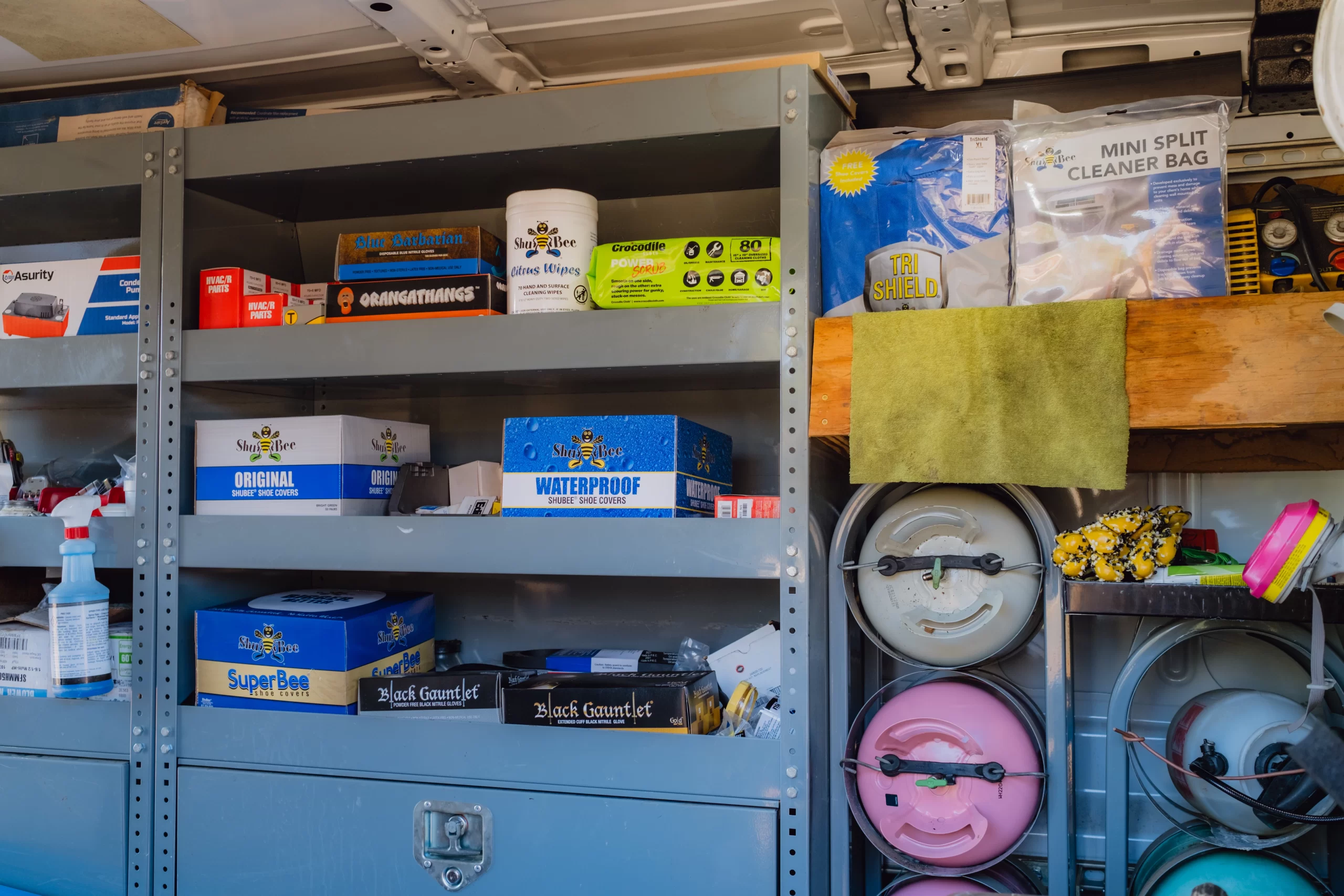
Avoid “The Grimy Handshake” – Always make sure to offer a solid handshake when approaching your customer, but avoid doing it with dirty hands. ShuBee offers a full line of disposable and specialty gloves to keep hands clean while working. Keep a tub of ShuBee Quickies™ in your truck to keep hands and work surfaces scrubbed.

Clean Outsells Dirty – A clean technician will stand out in an industry where dirty is considered the norm. Improve your tech’s presentations throughout the day with ShuBee’s Five-Pocket Coveralls. Using coveralls guarantees your tech’s uniform is as clean on the last call as it was on the first. Our coveralls are designed for people who work for a living – with a heavy duty zipper that won’t stick or rip when you’re done and an extra-long torso design to allow for more freedom of movement while you work plus five large pockets to hold your stuff.

Keep it Outside – Use ShuBee’s Original and Waterproof Shoe Covers to keep dirt out or your customer’s homes. Take the extra effort to show customers your commitment to not tracking mud and dirt in their house by putting on your shoe covers after you’ve introduced yourself, but before you enter the house.

Thank you, thank you, thank you – The customer is the reason you have a job today. Make sure they know how much you appreciate the opportunity to solve their problems. Follow your service call up with a quick thank you card in the mail a few days later. People remember what they don’t expect.

Expect a Callback – Use a combination of call back tools to ensure you get the call when the customer has another need. Place a magnet on the refrigerator on your way out or put a valve tag and sticker on any new appliances you install.

ShuBee is an industry leader and innovator dedicated to growing the Plumbing and HVAC industries to new heights by offering products, services and free consulting that’s proven to help the independent contractor, franchise owner and business leader to close more deals, brand their business better, increase customer confidence and ultimately grow their business. ShuBee knows what works because we’ve built our own successful Plumbing/HVAC companies using the same products, services, tips and techniques as we offer today.

Browse our full archive of Business Tips online at www.shubee.com/index.php/shubee-business-tips and start increasing closure rates and profitability today!

Share and Enjoy:
  • Digg
  • Sphinn
  • del.icio.us
  • Facebook
  • Mixx
  • Google
  • blogmarks
  • NewsVine
  • Propeller
  • SalesMarks
  • Socialogs
  • StumbleUpon
  • TwitThis

Apples to Apples

November 25th, 2008

There’s no secret to overcoming price objections. In fact, to say that we can “overcome” them may not be the best wording - there are many solutions to help you justify your prices. The ultimate goal is to eliminate the customer’s price concern by helping them to understand the value of your goods and services so they will have an easier time accepting the final ticket price.

There are several solutions for combating price objections when a customer claims that your competitor will do “exactly” the same work or provide the “exact” same goods for a smaller ticket - and they all hinge on one simple principle: know exactly what you’re competition is offering.

  • Significant price differences usually means a difference in product. Know the ins and outs of your competition’s sales and services and leverage this information to your advantage by having rebuttals ready for customers. Be prepared to justify your price through the use of superior components, better technician training, impeccable service records, etc.
  • Quality vs. Price. Many consumers aren’t aware of the costs associated with higher quality parts or components. Take time to explain the differences in the equipment you use or are installing and the overall benefits that the customer will see because of these better technologies.
  • Hidden Costs. Many times, a competitor known for low-balling prices may not include everything needed to get the job done correctly in their ads. This may attract more sales temporarily, but is certainly not customer-centric advertising and can end up costing the unaware consumer much more than your advertised price in the long run. When faced with this type of scenario, be sure to explain that your prices include all parts, labor and other expenses to do the job properly.

There are numerous reason a consumer might balk at price, by knowing your competitiors offerings you’ll be able to explain why yours is a better value even though the price tag may not be the cheapest.

Share and Enjoy:
  • Digg
  • Sphinn
  • del.icio.us
  • Facebook
  • Mixx
  • Google
  • blogmarks
  • NewsVine
  • Propeller
  • SalesMarks
  • Socialogs
  • StumbleUpon
  • TwitThis

Sell More During a Slow Economy

November 6th, 2008

In our present state, things can seem overwhelmingly dreary outside. Businesses have cut spending and some are having trouble getting the financing they need to make important purchases. Many people and businesses alike are simply scared to spend money on anything but the essentials… So how do you convince today’s consumer they still need your products or services?

When selling your wares, it’s important to understand the psychology of a sale – as well as the customer. Customer spending is down because their fears are high. Today, when making your sales calls it’s not as important to create a need to buy as it is to position yourself and your company in a way that lessens a customer’s fear to purchase.

Despite high tensions, added stress and other uncontrollable outside forces that act on us all, it’s important to remain calm throughout the sales process and relay this calmness to the customer. Convey a sense of stability and longevity about your company. Let your prospects and customers know that your business is not going anywhere just because times are a little slow right now.

Make certain you’re listening more than you’re talking. It’s important that your customer knows that his needs are important to you. The first step of closing any sale is information gathering. Make sure you’re doing just that by asking the right questions:

  • What can you tell me about your (your company, this project, yourself)?
  • What do you like about (how you’re currently handling this problem, what you’re currently doing)?
  • What don’t you like about your current situation?
  • What would you like to be enhanced or improved?
  • What features are important to you?
  • What prompted you to start this project now?
  • What can you tell me about your decision-making process?
  • How do you handle budget considerations?
  • What other options are you looking at?
  • What obstacles are in the way of moving this forward?
  • How will you be evaluating different options?
  • How will the funding for the project be justified?

It’s times like these that really separate the true sales professionals from the order takers. By remaining calm, not using high-pressure sales techniques, establishing a sense of stability and trust about your company and asking the right questions you’re sure to continue closing deals throughout this current economic meltdown. The upside to these uncertain times is that your competitors are probably more worried about the current state of the economy rather than making sales.

Share and Enjoy:
  • Digg
  • Sphinn
  • del.icio.us
  • Facebook
  • Mixx
  • Google
  • blogmarks
  • NewsVine
  • Propeller
  • SalesMarks
  • Socialogs
  • StumbleUpon
  • TwitThis

Three Universal Principles of Selling

October 22nd, 2008

ShuBee caters to tens of thousands of clients involved in nearly as many businesses spanning across several unique industries. Despite their differences, all of our customers are somehow tied into sales. Whether it’s Joe Plumber trying to close the deal on a new installation, a franchise purchasing agent acquiring supplies for multiple locations or a wholesale distribution buyer re-upping inventory for resale – sales are at the root of the business.

For any business to keep its doors open and be profitable some form of selling has to happen, and there are three basic selling principles that are relevant in absolutely any and every selling situation:

1. Learn about what your client “does” – Some may argue that identifying a client or prospect’s “needs” is the most important information you can gather during the selling cycle. Sure, that may get you a quick sale right now, but it may not be the best solution to solve the customer’s problem. If we can take a few minutes to do some information gathering to figure out what the customer is doing right now, we may be able to offer a better solution to the problem than what the customer originally had in mind. For example, if one of our clients calls in to place a large order for our Deluxe Comfort Back Support Belts, we could ask if they routinely do a lot of heavy team lifting with oversize objects and introduce them to the Forearm Forklift. Not only does this add an extra item to the sales ticket, but it also helps us create a closer relationship with the client. They appreciate the help we offer to better solve their problem and helps us turn customers into fans. It’s important to ask questions during this part of the selling cycle, but make sure these questions are focused on what the customer is doing, not what the customer thinks he needs. Some effective information gathering questions are:

  • What are you doing now to solve this problem?
  • How many times have you had to address this issue?
  • Why did you decide to use this method?

2. Be more concerned about their problems than they are – Once you’ve completed the first fundamental principle of selling by learning what the customer is doing or trying to accomplish, make sure they understand it’s your mission to help them achieve their goal. You want your customer to know you’ll be more disappointed if they’re not successful than they will. If you’re concerned that a client may not achieve a goal or expectation, you’re more likely to help strategize ways to ensure that your client is successful. For instance, if one of our resale customers has a goal of moving X number of cases of product during the next month, we work hard with them to help achieve that goal through marketing collateral and other internal incentives. This approach to solving the customer’s problems puts us in the position of being their ally on their project and again helps to convert customers into raving fans.

3. If all efforts to close fail, ask where you went wrong – Strategies may have changed, positions altered or the stars just didn’t line up quite to your favor. You were certain the deal was in the bag but your client backed out at the last minute. It’s a bummer. Rather than just let this prospect go on their way and you yours, find out what happened. All it takes is a quick email or phone call to ask the simple question, “What went wrong on this proposal?” This type of question will generate fast responses with excellent information. Use this information to re-evaluate your closing technique or strategize a new proposal to present to your prospect. Many times you’ll find that you didn’t do anything wrong during the selling process. The customer or company simply changed position. Use this information to suggest alternative plans or options to get around any problems that may have come up during the proposal.

Share and Enjoy:
  • Digg
  • Sphinn
  • del.icio.us
  • Facebook
  • Mixx
  • Google
  • blogmarks
  • NewsVine
  • Propeller
  • SalesMarks
  • Socialogs
  • StumbleUpon
  • TwitThis

What Economic Downturn?

October 11th, 2008

Slow economy, unstable market, high gas prices, economic bailout plans - what all does this mean to us - the business owners, purchasers and marketers responsible for keeping the business afloat during these uncertain times? First response to times like these is to cut the marketing and advertising budget.

Sometimes budget cuts are justified, but in most cases they’re a big mistake, here’s why:

Marketing Equals Revenue.

Research has proven time and time again that a business’ marketing budget is directly proportional to the profitability of a company. Cutting resources to your marketing and advertising campaigns will simply not benefit the business. Period.

Budget cuts and a reduction of advertising allow the smart and creative businesses to recapture a bigger share of their market while their competitors are trying to save money. Essentially, with few advertisers present to promote their products and services, the less competition there will be fighting for business. From the customer’s viewpoint, this is perceived as fewer choices to purchase the same product or service. This makes it all that more important to keep your campaigns going through times like these! With few competing advertisers, it only makes sense that those who are still promoting and staying in front of their customers will see an increase in their ROI.

Here’s a couple of ideas to help you boost your business’ market share during this economic slump to help guarantee you come out on top with things do finally turn around.

  • Networking - Join professional organizations in your community, particularly those that pertain to your industry. Become active in their discussions and events. List your name in their member directory. Ads placed in an industry specific membership directory are more likely to reach an audience who are more apt to purchase your product or service.
  • Train Sales Staff - During slow times, the strength of your sales staff becomes even more important. Include training on products, services and sales pointers (see our previous article on how to close a deal). If times are slow, it’s important that your sales team be at the top of their game in order to make the most of every opportunity.
  • Attend Trade Shows - Take these opportunities to learn first-hand about current industry trends, new products and technologies. Many companies cut back trade show attendance during slow times, but this isn’t good business practice. In a slow economy, it’s important that you know what resources are available to help differentiate you from your competition.
  • Utilize Co-op Advertising - Many corporations will help subsidize your advertising project if you feature their product or mention that you’re one of their authorized dealers. This is a highly effective way to stretch your ad budget, allowing you to launch a broader campaign with the same amount of money.
  • Shift Your Marketing Dollars - It’s important to know where your money comes from. If you find that 80% of your revenue comes from 20% of your customer base, this 20% can more easily be encouraged to purchase your products and services again than the remaining 80% who may not be inclined to use you as often. Focus your advertising efforts on the top-buying 20%. The best way to encourage those regular customers to purchase again is by steadily making contact with them through outlets such as direct mail, email newsletters or even a simple phone call. The more times you’re able to connect with your customers the better information you’ll be able to get from them regarding their purchasing habits, needs and trends in their industry. This also allows for a more personal relationship between you and you customers, allowing you to convert customers into fans.
  • Public Relations - Proper PR is a great way to jump out ahead of your competition and usually costs less per lead than traditional advertising means. Has your company had any major changes, purchased new cutting-edge equipment or developed a new technique of doing a job that may save customers money? Write up a brief press release any time your company does something newsworthy and submit it to your local publications (or even national publications if it’s a big enough story). This type of exposure increases your company’s credibility in the public eye because the articles that your press release may generate are written by unbiased, third parties.
  • Diversify - Think outside the box. Are there any industries or markets you’re not exposing yourself to that could use your products and services? New markets can be an untapped gold mine for your business.
  • Expand Your Web Presence - Past economic swings have shown us that Internet Advertising tends to be more recession proof than traditional advertising and typically is cheaper than print. Take advantage of industry-related advertising opportunities. If you run a Pay Per Click (PPC) campaign like Google’s AdWords, use their geographical features to advertise outside your normal areas of business. Target the areas to which you would like to expand your business.

Simple logic tells us that if a slow economy has others pulling their advertising from the marketplace, that leaves us more opportunity to gain sales by reaching their customer base. Always keep marketing!

Share and Enjoy:
  • Digg
  • Sphinn
  • del.icio.us
  • Facebook
  • Mixx
  • Google
  • blogmarks
  • NewsVine
  • Propeller
  • SalesMarks
  • Socialogs
  • StumbleUpon
  • TwitThis

Effective Ad Building

October 2nd, 2008

Phone book ads can be expensive, what are you doing to make sure yours stand out from your competitions’? Successful ads follow a proven formula. They contain a clear call to action, answer important questions and inform potential consumers how you can solve their problems. This week we’re going to continue talking about effective Yellow Page advertising. Though this is geared towards phone book advertising; these principles can easily be applied to all of your advertising efforts whether they are print, web or broadcast media.

  • Run a smaller, less expensive ad to let your customers know that your reduced advertising budget is actually saving them money - “My Small Ad Here Saves You $$$” works perfect in this case
  • Let your customer know how you’ll solve their problem. There are certain issues customers will have with your industry - pricing, timing, scheduling… Let them know how your company handles these issues differently. If you offer up-front pricing to avoid invoice shock, make this known in your ad. If you guarantee a service tech will be on-site within an hour of a customer’s call, make sure you highlight this.
  • Use testimonials. Nothing gives your services more credibility than the testimony of a satisfied customer. Make sure to include the customer’s name, city and title to add even more oomph.
  • Pictures are attention grabbers. Use a picture of your service truck in your ads. Stock photography of a receptionist does little to entice a potential customer to call. People are more likely to remember seeing your service truck which ads more credibility to your company.
  • Let the customer know how to contact you. This sounds like a no-brainer but it’s worth repeating. The most eye-catching ad in the world will do you no good if the customer doesn’t know how to contact you. Make sure you include your phone number, email, website address, physical address and any other ways you’d like your customers to contact you.
  • Be genuine in your ad. Avoid gimmicky sales pitches or misleading offers. Never advertise a price or service you have no intention delivering just to make your phone ring. No one likes to feel duped.

The key here is to maximize the impact of your ad space and encourage the reader to pick up the phone. Stay tuned for more tips and tricks on maximizing your advertising budget!

Share and Enjoy:
  • Digg
  • Sphinn
  • del.icio.us
  • Facebook
  • Mixx
  • Google
  • blogmarks
  • NewsVine
  • Propeller
  • SalesMarks
  • Socialogs
  • StumbleUpon
  • TwitThis

Business Listing Do’s and Don’t

September 18th, 2008

It used to be that an adequate advertising budget consisted of a large business listing in the big yellow book and a receptionist on standby to field the flood of incoming calls.

Those days are long gone.

If your business is still solely relying on this level of advertising campaign, its days could be numbered as well. Fact is, Yellow Page usage is on the decline. If their own launch and heavy promotion of a dot com doesn’t indicate their print division is hurting, here are a few facts from a report in PHC magazine that to further back up the fall of the yellow book:

  • Page count is dropping 8% a year
  • Yellow Page usage has dropped 25% since 1999
  • Usage continues to fall 5% a year

So what options are available to help you A) Cut your budget with an ineffective advertising program and B) Maximize what money you do choose to spend on a yellow book business listing? There are numerous avenues to take to achieve advertising bliss, let’s take a look:

  • Running a smaller size ad - It’s not always the double truck ad that gets the most attention. Test this for yourself, open your Yellow Pages and look up auto dealers. Did the biggest ad catch your attention or was it one that was designed better, had more effective use of color or a catchy call to action? Take the time and effort to have your ads designed better with a clearly defined call to action and you can have more impact in less space.
  • Don’t pay extra for front placement - When you looked up that auto dealer, was the first ad in the section or did you find your choice in the middle? Yellow Page salespeople will always try to upsell your on that front placement but fact is, few people start at the front of the section!
  • Don’t buy a special phone number just for your Yellow Page ad - This is simply an add-on service with no real return. Don’t buy into the “metering” game for your ad. If it’s written and designed effectively you’ll know through increased business.
  • Provide “Camera Ready” Artwork - OK, so the term “camera ready” is about as outdated as a heavy Yellow Book ad campaign, but there are still ways you can submit your artwork for your ad to help reduce costs. Hi-Res PDFs should work fine, but make sure to ask your saleperson how they prefer their art. Graphics snagged from a website can print grainy and make your ad look unprofessional.
  • Use a Border - Make sure your ad is designed with a border around it to help it stand out from the other ads around it.
  • Make your Phone Number the Primary Focus - Remember, the primary purpose of any directory ad is to have prospective clients call you, make sure your phone number is the main attention grabber in the ad. Use one phone number and make it large!

With these few tips, you can easily maximize the impact of your ad space and even save hundreds or more a month in advertising dollars which can better be utilized elsewhere - like a clover leafing campaign, new vehicle graphics, call back tools or even a website!

Share and Enjoy:
  • Digg
  • Sphinn
  • del.icio.us
  • Facebook
  • Mixx
  • Google
  • blogmarks
  • NewsVine
  • Propeller
  • SalesMarks
  • Socialogs
  • StumbleUpon
  • TwitThis

Six Tips to Get Your Mail Read

September 4th, 2008

You’ve already spent money putting together a flyer, promo package or other mail piece to send to your customers, this week we’re going to go over a six pointers on how to make sure it doesn’t end up filed away in the trash can.

  1. Stuff It - If you’re sending a sample or other trinket to a client or prospect, find a way to make it puff the envelope. This makes it harder to stack other mail on top of yours which means your mail is more likely to end up at the top of the stack - making it the first to be read.
  2. Hand Write Your Addresses - Computer generated mailing labels can certainly be a time-saver, but they also make your mail look more like everyone else’s junk mail as well. Hand writing your mailing label adds a personal touch to your message and shows your recipient that you’ve put time and thought into your mailing.
  3. Use Colorful Wrap for Packages - Mailing departments, shipping and receiving or even the small mom and pop shop receive numerous letters, boxes and brown paper wrapped packages daily. Packages wrapped in colorful, festive papers stand out to the delivery team (and the recipient) and are more apt to be delivered to the right person in a timelier manner. Also, bright colored packages are more likely to be opened instead of sitting on a desk for days.
  4. Use a Clear Call to Action - Tell your reader exactly what you want them to do and by what time. “Save 10% if you call by 9:00 a.m. Tuesday.” This seems like common sense, but you’d be surprised how many advertisements are ineffectively written by not including a call to action. If you’re advertising a new product or service, make sure to include a line informing the reader that this is a new item. If you’re promoting a sale or special, be sure to include the sale price and valid dates for the offer. And in any written correspondence, always, always, always, include a way for your readers to get back in touch with you! The best call to action ever written will do you absolutely no good if there’s no clearly identified way for a customer to get back in touch with you.
  5. Validate Your Recipients - The USPS receives 5.4 billion pieces of undeliverable mail every year. Why? 2.4 percent have moved; 4.1 percent have missing or wrong apartment numbers; 6 percent have missing or wrong directionals or suffixes; 0.4 percent have wrong route or box numbers; 5.9 percent have wrong street names or numbers; 4.8 percent have the wrong ZIP code, city or state. Make sure you have the correct delivery information on your mail piece. If you’re unsure, call your customer to verify you have the correct information. This is a perfect opportunity for you to introduce yourself or merely touch base and let your customer know you have an important piece of mail you’d like to send them.
  6. Don’t Send “Junk” Mail - We all loathe junk mail. It’s important to stay in front of your customers, but make sure your mail has a purpose! Don’t overwhelm your customers with mail every other day and don’t include irrelevant information in your messages. Keep you mail short, to the point and action-oriented.

Follow these tips and your mail stand is sure to stand a better chance of staying out of “File 13!”

Share and Enjoy:
  • Digg
  • Sphinn
  • del.icio.us
  • Facebook
  • Mixx
  • Google
  • blogmarks
  • NewsVine
  • Propeller
  • SalesMarks
  • Socialogs
  • StumbleUpon
  • TwitThis

Clover Leaf to Bigger Business

August 21st, 2008

How many marketing opportunities do you utilize that can easily add an additional 20% to your bottom line? Whatever your answer, it’s not enough! This issue of ShuBee Business Tips, we’re taking advice from ShuBee founder, Steve Stone on a simple and inexpensive, yet highly effective way to grow your business.

Steve explained a technique called “Clover Leafing,” which he used to gain new customers when he was operating his plumbing/HVAC business. The concept is simple; after he would finish a call with one of his clients, he would go to the house to the right and left of his service call as well as to the house across the street (making a clover leaf pattern) to drop off a leave-behind advertisement such as a door hanger, business card, magnet, etc. with his contact information. By taking these simple steps to introduce his company to potential clients, he guaranteed himself new sales every day! While the effects of a campaign may not be as immediate as some other forms of advertising, its long-term impact can help grow your business exponentially.

Using a quality leave-behind in a technique like this does several things:

  • It introduces your company to new potential clients
  • Promotes word of mouth advertising - the best kind
  • It keeps potential clients out of the yellow pages and away from your competition’s ads

How effective can clover leafing be? Well, let’s do some math…

The average service-based business has three trucks. Each truck serves five calls a day with an average ticket of $280.00. Each day’s business comes to $4,200.

Assuming that you’re not taking calls on the weekend (just to keep things simple), that’s about $21,000 in business per week or just over one-million per year.

Not too shabby. Now let’s add a clover leafing campaign into the mix.

Let’s say that all your drivers reach out to just three potential new clients after their service call using this clover leaf technique. If each service team can gain one new client per day, that’s an additional 15 calls per week. Based on the same $280 average ticket price, total sales for the year just went up $201,600!

Let’s say my math is off and your return rate is only half of what we’ve projected here… Couldn’t you stand to gain an additional hundred thousand or so?

To help make the program even more effective, consider adding an incentive to your customers. Advertisements that utilize customer savings are generally three times more effective than ones that are simply an advertisement for your business. Consider offering these potential new clients a discount for responding to your clover leafing campaign by waiving their travel charge on this call since you’re already in their neighborhood.

Use promotional items you already have in hand such as your business cards, door hangers or refrigerator magnets.

Make this program worth while for your employees as well by offering a spiff. Let’s say you include a $50 bonus to your drivers for each new customer they pick up using this clover leaf campaign. This may sound like large spiff to pocket, but if you figure that on average it takes around $230 of advertising to close a new client, wouldn’t it be nice to pick up a few up for $50 or so?

Share and Enjoy:
  • Digg
  • Sphinn
  • del.icio.us
  • Facebook
  • Mixx
  • Google
  • blogmarks
  • NewsVine
  • Propeller
  • SalesMarks
  • Socialogs
  • StumbleUpon
  • TwitThis

20 Ways to Cut Insurance Costs

July 31st, 2008

A recent study by the National Federation of Independent Business shows cost of providing health insurance is the #1 concern for small business, followed closely by availability of liability insurance and workman’s compensation. The rising costs of fuel have pushed that concern to the #4 spot so far.

It’s doubtful that insurance will ever become wildly popular expense for business. Benefits of providing and having insurance are often only evident after there’s been a problem. Many business owners simply see the premiums due and view insurance as another bill with little to no return.

Insurance doesn’t have to be a sore spot when it comes to balancing your business’ budget. There are ways you can work with your provider to help lower your insurance costs, mainly by reducing work related accidents. Here’s a few pointers to help ease the burden of those premiums:

  • Know what you need: To gain a better perspective of the amount of coverage your small business needs, take a look at your industry. Review the recent legal actions and settlements in your field. Talk to peers and find their level of coverage. Using this feedback and research, determine the average legal costs and settlement to set your coverage limits.
  • Look for an industry expert: Your business and industry has unique needs and risks. To get the best available coverage and rates, consider working with an insurance broker who knows your business and has experience in your industry.
  • Call your agent or broker: It may seem obvious but can be easily overlooked. Simply call your agent or broker and explain what your business insurance needs are. Ask if there are any incentives your provider offers for lowering your insurance or programs you can enroll your business into to help reduce insurance costs.
  • Background check and drug screen your employees: Not only will this ensure you’re hiring quality employees, many insurance providers offer incentives for businesses that perform drug screenings. Announce this policy to your clients with Seal of Trust Patches or vehicle Flip Frames.
  • Membership has its privileges: Many associations and business groups offer insurance packages to their members at group rates. Contact your local Chamber of Commerce or Better Business Bureau for more details.
  • Shop around: Rates and extent of coverage vary from insurer to insurer. Call around to find out who offers what services at what rates. Make sure to ask about legal fees. What percentage is included if at all?

Understanding exactly what you need for your business is by far the key to ensure you aren’t overpaying on your premiums. Beyond these steps, there are a variety of ways you may be able to help cut costs even further. When talking to your agent or broker, ask if your provider offers discounts for the following:

  • higher deductibles
  • more than 1 vehicle
  • no accidents in 3 years
  • no moving violations in 3 years
  • driver training courses
  • defensive driving courses
  • anti-theft devices
  • low annual mileage
  • air bags
  • anti-lock brakes
  • daytime running lights
  • auto and homeowners coverage with the same company
  • long-time customer
  • other discounts

You’ll never be able to eliminate the need for insurance (or our insurance bills) but with these steps in place you may be able to take some sting out of opening that insurance bill every month.

Share and Enjoy:
  • Digg
  • Sphinn
  • del.icio.us
  • Facebook
  • Mixx
  • Google
  • blogmarks
  • NewsVine
  • Propeller
  • SalesMarks
  • Socialogs
  • StumbleUpon
  • TwitThis
 

My Cart

You have no items in your shopping cart.

Compare Products

You have no items to compare.

Community Poll

In order to serve you better, we want to know who you are: